
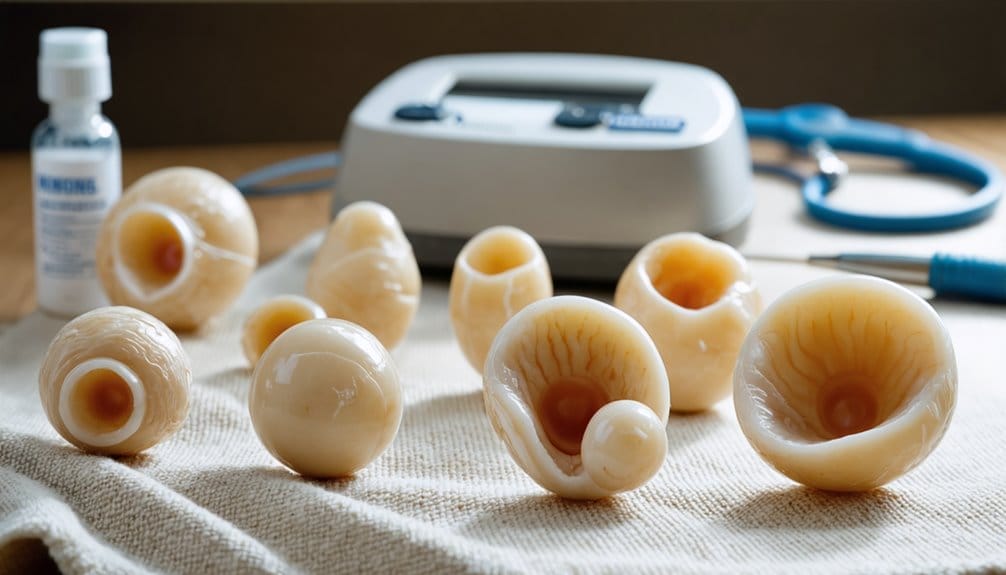
IVF patients should recognize various hymen types, as certain variants like septate, cribiform, microperforate, and imperforate hymens can impact fertility treatments. These hymens may obstruct menstrual flow or complicate surgical procedures essential to IVF success. Identifying such variations early through appropriate medical evaluations aids in tailoring treatment plans. Surgical intervention might be necessary to address these anomalies and minimize complications. Understanding hymen types guarantees enhanced reproductive health and successful IVF outcomes. Discovering more insights might enhance understanding further.
Key Takeaways
- Understanding hymen variants is crucial for IVF success, as certain types can obstruct menstrual flow and affect treatment outcomes.
- Annular and crescentic hymens generally allow normal menstrual flow, posing minimal concerns for IVF patients.
- Septate, cribiform, microperforate, and imperforate hymens may require surgical intervention to facilitate menstrual flow and improve IVF success.
- Regular gynecological check-ups help identify hymen abnormalities, enabling tailored IVF protocols to address potential complications.
- Open communication with healthcare providers ensures informed decisions regarding hymen-related issues and their impact on reproductive health.
Understanding Hymen Variants
Although often overlooked in general discussions about women's reproductive health, understanding the different types of hymen variants is essential, especially for those undergoing fertility treatments like IVF. Hymen variants, such as the imperforate hymen, microperforate hymen, and septate hymen, can greatly impact menstrual flow and overall reproductive health. An imperforate hymen obstructs the vaginal opening entirely, leading to symptoms like abdominal pain and absence of menstruation. A microperforate hymen, with its tiny openings, may allow limited menstrual flow but complicates tampon use. A septate hymen features a band of tissue across the vaginal opening, possibly affecting intercourse. Treatment options, like hymenectomy, offer relief by surgically opening the hymen, alleviating symptoms, and improving menstrual flow, facilitating a smoother IVF process. Additionally, embryo donation can offer a viable alternative for individuals facing fertility challenges due to anatomical issues like hymen variants, ensuring better chances of conception.
Types of Hymens and Their Characteristics
Understanding the various types of hymens and their characteristics is essential for those considering or undergoing fertility treatments like IVF. The annular hymen, the most common type, forms a ring around the vaginal opening, facilitating normal menstrual flow and intercourse for the majority of women. A crescentic hymen, with its crescent moon shape, typically does not rupture during sexual activity. The septate hymen, featuring extra tissue, can complicate vaginal access and may necessitate a surgical procedure. In contrast, a cribiform hymen, characterized by multiple small openings, can hinder menstrual flow and tampon use. An imperforate hymen, which completely covers the vaginal opening, may lead to significant menstrual complications, often requiring surgical correction to resolve issues encountered during puberty. Vaginal tightening is a common procedure that addresses complaints of vaginal flexibility, often pursued alongside hymen-related surgeries to enhance overall vaginal aesthetics.
Imperforate Hymen: Challenges and Solutions
An imperforate hymen presents significant challenges for individuals, especially as they reach puberty. This condition completely obstructs the vaginal opening, preventing menstrual blood from exiting the body, often resulting in hematocolpos. Symptoms, typically emerging during puberty, include abdominal and pelvic pain, urinary retention, and dysuria. These issues lead to a diagnosis usually confirmed through physical examination and imaging, such as ultrasonography. Surgical intervention, specifically a hymenectomy, is the recommended treatment, ideally performed after puberty when the vaginal tissue is adequately developed. This procedure effectively resolves the obstruction, providing relief from symptoms. Post-surgical outcomes are generally positive, with minimal pain and no regrowth of the hymenal tissue, consequently allowing these individuals to continue their lives without further complications. It's important to ensure hormonal therapy is managed appropriately, as it can significantly impact treatment outcomes in related reproductive health issues.
Microperforate Hymen: Symptoms and Management
Following the discussion on the imperforate hymen, another anatomical variation that poses unique challenges is the microperforate hymen. This condition features a very small opening, permitting some menstrual bleeding but complicating tampon use and intercourse. Symptoms of a microperforate hymen often include difficulty with tampons, pelvic pain, and retained menstrual blood, which can result in malodorous discharge. Diagnosis typically occurs through a physical examination, where a moist cotton swab assesses the hymen's opening. Effective management usually involves a hymenectomy, a minor outpatient procedure designed to remove excess tissue, creating a functional vaginal opening. Many individuals remain unaware of their microperforate hymen until symptoms arise, underscoring the importance of seeking medical advice for unresolved menstrual issues.
Septate Hymen: Identifying and Treating
A septate hymen, a common anatomical variation, features a band of extra tissue dividing the vaginal opening into two smaller passages. This condition, affecting approximately 1.5 to 5% of women, may cause complications such as discomfort during tampon use, pain during intercourse, or challenges with menstrual hygiene. Diagnosis involves a physical examination to identify the septate tissue, ensuring that no other anomalies are present. For those experiencing symptoms, a hymenectomy is typically recommended. This minor outpatient procedure involves the surgical removal of the extra tissue to form a single vaginal opening. Postoperative recovery is generally smooth, with minimal pain and bleeding. Importantly, the hymenal tissue does not regrow, providing long-term relief and improved quality of existence.
Impact of Hymen Variants on Reproductive Health
The discussion of septate hymens naturally leads to a broader examination of how various hymen types can influence reproductive health. An imperforate hymen typically presents significant challenges, obstructing the vaginal opening and causing symptoms like abdominal and pelvic pain, urinary retention, and absence of menstruation. In such cases, surgical intervention is necessary, where a gynecologist removes the obstructive tissue to guarantee the hymen needs to be open for normal function. Similarly, a septate hymen occurs when a band of tissue partially obstructs the vaginal opening, often complicating vaginal intercourse. This condition requires treatment where the tissue is removed to prevent complications. Addressing hymen variants is vital for alleviating discomfort and safeguarding proper reproductive health, particularly for those experiencing symptoms.
Importance of Hymen Examination in IVF Patients
Although often overlooked, hymen examination holds significant importance for IVF patients. Identifying hymenal variants such as imperforate or microperforate hymens is essential, as these can obstruct menstrual flow and complicate reproductive processes. Such obstructions may lead to retained menstrual blood, increasing the risk of infections or endometriosis, which can adversely affect fertility and IVF outcomes. By understanding these hymen-related issues, healthcare providers can tailor IVF protocols to address any potential complications, ensuring ideal conditions for embryo transfer. Proper assessment aids in early detection and management, ultimately enhancing reproductive health. This proactive approach increases the likelihood of successful IVF cycles, demonstrating the fundamental role of hymen examination in supporting patients on their fertility journey.
Surgical Options for Hymen Variants
When addressing hymen variants in IVF patients, surgical options provide effective solutions for conditions like imperforate hymen that can hinder reproductive health. A hymenectomy, a minor outpatient procedure, removes excess tissue to create a proper vaginal opening, alleviating symptoms and complications. It is particularly beneficial for imperforate hymen cases, where retained menstrual blood can cause discomfort and health issues. Timing is essential; performing the surgery post-puberty guarantees estrogenized tissue, leading to improved healing and outcomes. For microperforate and cribiform hymens, surgical intervention becomes necessary if complications arise, such as difficulty with tampon use. These procedures are typically performed in-office or in an operating room, with minimal pain and low complication risks, allowing patients to maintain their reproductive health and well-being.
Conclusion
In the intricate tapestry of reproductive health, hymen variants represent unique threads that can influence the journey of IVF patients. Understanding these variations, from imperforate to septate hymens, is essential for maneuvering potential challenges and ensuring successful outcomes. A thorough examination, like a skilled weaver's touch, can untangle complexities, guiding tailored treatment options. Accordingly, knowledge and proactive management of hymen types are significant, enabling IVF patients to approach their reproductive endeavors with clarity and confidence.

 English
  Bulgarian
  Italian
  Arabic
  French
  Turkish
  German